

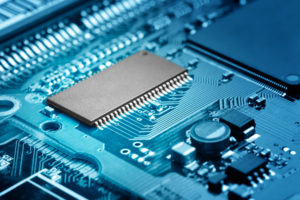

The rapid evolution of artificial intelligence (AI) workloads has driven the adoption of multi-die AI accelerator architectures, unlocking unprecedented computational performance for applications ranging from deep learning to high-performance computing. These architectures integrate multiple high-performance chips into a single system, creating densely packed configurations that push the limits of power delivery and thermal management. Designing such systems presents significant challenges, as inadequate handling of heat or voltage fluctuations can lead to performance throttling, signal integrity issues, and reduced component lifespan. Effective PCB layout design becomes a critical factor, ensuring that each die receives stable power, maintains optimal thermal conditions, and communicates reliably with neighboring dies.
By implementing thoughtful layout strategies, engineers can achieve not only maximum system efficiency but also long-term reliability, enabling AI accelerators to meet the demanding requirements of modern workloads while supporting scalable future expansions.
Understanding Thermal Hotspots in Multi-Die Architectures
Identifying and managing thermal hotspots is essential to prevent performance degradation in densely packed multi-die systems.
- Identification of High-Power Regions:Multi-die AI accelerators concentrate high-performance chips in small areas, creating power-dense hotspots. These regions generate excessive heat, risking performance drops and reduced component lifespan. Early detection during design enables engineers to apply precise cooling strategies.
- Thermal Simulation and Modeling:Thermal simulation tools predict heat distribution across the die stack and PCB. By analyzing airflow, conduction, and thermal resistance, designers optimize component layout and material choices. This proactive modeling helps prevent overheating and ensures stable operation.
- Integration of Heat Dissipation Solutions:Heatsinks, thermal vias, and conductive planes are integrated directly into the PCB for heat management. Strategic placement of these elements promotes even heat dispersion across the system. This approach reduces localized thermal stress, ensuring reliable multi-die performance.
By combining precise hotspot detection, thermal simulation, and integrated heat dissipation, engineers ensure stable and reliable operation.
Power Delivery Challenges in Dense Die Configurations
Dense multi-die layouts create unique challenges in voltage regulation and power stability that must be addressed proactively.
- Voltage Regulation Across Dies:Multi-die architectures require precise voltage control for each chip. Voltage variations can cause timing errors or system instability. Careful PDN design ensures consistent power delivery under dynamic workloads.
- Minimizing Power Noise and IR Drop:Dense layouts can lead to voltage drops and power noise from narrow PCB traces. Low-impedance power planes and decoupling capacitors mitigate these fluctuations. This ensures stable and reliable operation across all dies.
- Scalable Power Architecture Design:A scalable PDN supports future expansion of AI accelerators. Modular power delivery allows adding dies without major redesigns. This approach maintains thermal and electrical efficiency across the system.
Scalable and robust power delivery networks maintain electrical efficiency and support future system expansions.
Signal Integrity and Interconnect Optimization
High-speed interconnects and proper PCB design are critical for maintaining signal integrity between multiple dies.
- High-Speed Interconnects Between Dies:Multi-die accelerators depend on fast interconnects for efficient data transfer. Crosstalk and signal degradation can disrupt communication between dies. Optimized trace routing and controlled impedance preserve signal integrity.
- Layer Stack and Material Selection:PCB layer count and substrate materials directly influence signal quality. High-frequency laminates and well-planned stack-ups reduce insertion loss and EMI. This ensures reliable, high-speed die-to-die communication.
- Decoupling and Termination Strategies:Decoupling capacitors and termination resistors prevent reflections and voltage overshoot. Strategic placement maintains signal stability in high-bandwidth systems. These measures are critical for timing accuracy in AI accelerators.
Layer selection, decoupling strategies, and impedance control collectively ensure accurate and reliable die-to-die communication.
Thermal-Aware PCB Layout Design Techniques
Thoughtful PCB layout strategies directly influence airflow, heat dispersion, and overall thermal performance in multi-die systems.
- Strategic Component Placement:Positioning high-power dies with proper spacing improves airflow and reduces hotspots. Optimized layout enhances the effectiveness of passive and active cooling solutions. This approach supports long-term system reliability and performance.
- Integration of Thermal Vias and Copper Planes:Thermal vias move heat from the die to the inner copper layers, while thick planes spread it evenly. These structures create low-resistance paths for efficient heat dissipation. Balanced thermal management prevents localized overheating on the board.
- Simulation-Driven Layout Refinement:Thermal and power simulations guide iterative PCB layout improvements. Potential hotspots and bottlenecks are visualized before physical prototyping. Component repositioning and layer adjustments ensure optimal system performance.
Simulation-driven refinement and strategic thermal management techniques minimize hotspots and optimize system longevity.
Collaborative Design Practices for High-Performance AI Accelerators
Multi-die AI accelerator development demands close collaboration among hardware, thermal, power, and PCB engineers.
- Cross-Disciplinary Engineering Teams:Successful multi-die AI accelerator design requires seamless cooperation among hardware, PCB engineering, thermal, and power experts. This integrated approach ensures that power and thermal constraints are addressed early, improving overall system reliability and performance. Cross-functional teamwork improves overall system reliability and performance.
- Design Verification and Prototyping:Prototyping and testing validate thermal simulations and power delivery networks. Real-world measurements enable adjustments to layout and component placement. This reduces the likelihood of failures in the final product.
- Continuous Optimization and Iteration:Rapidly evolving AI architectures demand ongoing design improvements. Iterative testing and feedback refine PCB and system-level performance. Each generation achieves better thermal efficiency and stable power delivery.
Continuous prototyping, verification, and iterative improvements ensure each generation achieves better thermal efficiency and stable power delivery.
Final Thoughts
Managing thermal and power delivery constraints in multi-die AI accelerator architectures is a complex but critical task. By employing strategic PCB layout design, careful voltage regulation, and thermal-aware techniques, engineers can ensure reliable, high-performance operation. Implementing these practices equips AI systems to handle demanding workloads efficiently while preparing them for scalable future iterations. Integrating advanced design solution methodologies enhances overall system performance and longevity.
Tessolve is a global leader in semiconductor engineering solutions, specializing in delivering end-to-end design, validation, and manufacturing support for high-performance AI and embedded systems. With expertise in layout design, power delivery, and thermal management, Tessolve provides innovative solutions that accelerate product development while ensuring reliability and efficiency. Connecting with Tessolve means accessing cutting-edge engineering expertise tailored for the next generation of multi-die AI architectures.